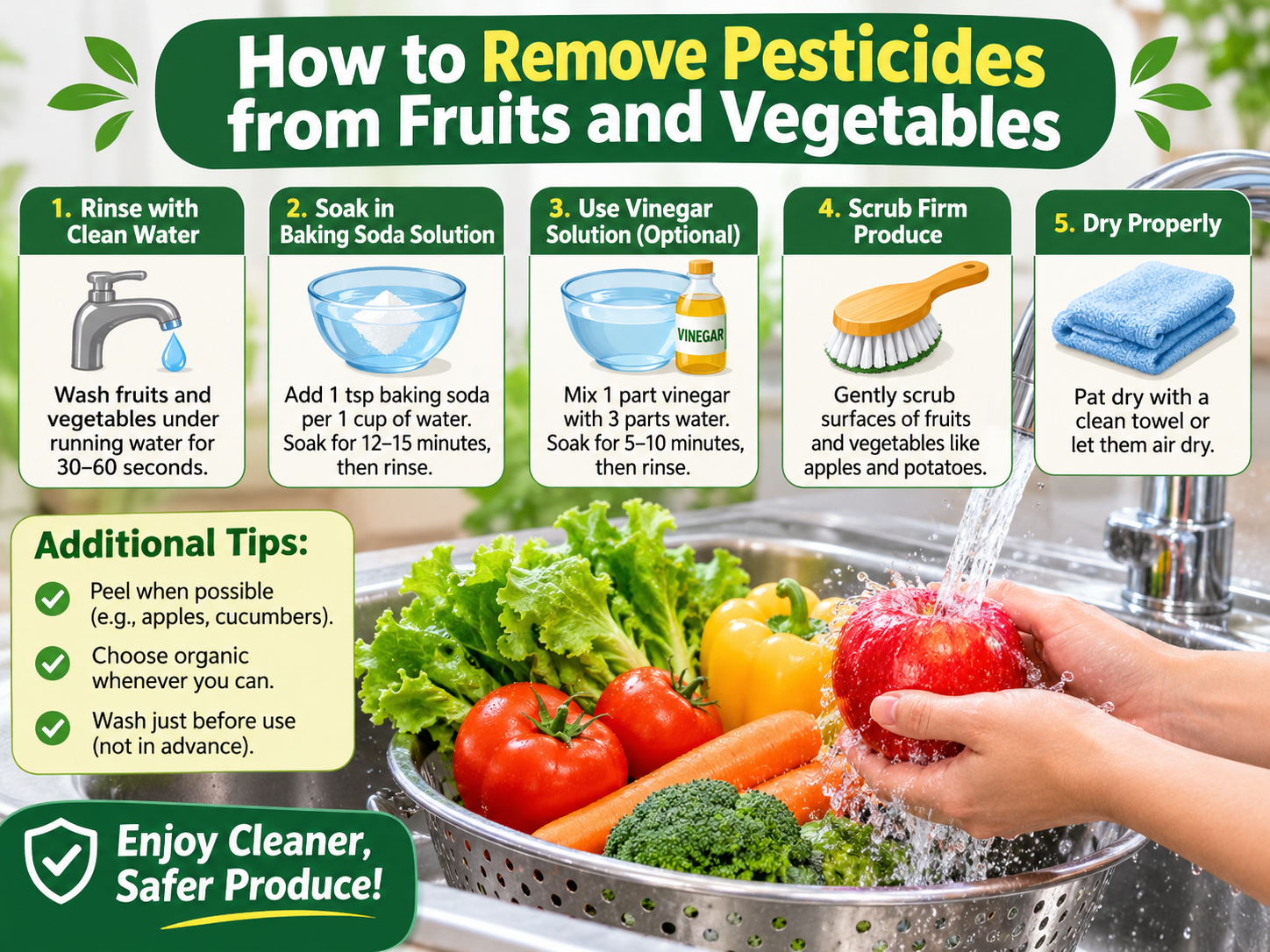
How to Remove Pesticides from Fruits and Vegetables is an important question for people who want to make healthier food choices. Fruits and vegetables are essential parts of a balanced diet, but some crops may contain pesticide residues from agricultural practices. These residues can remain on the outer surface or, in some cases, inside the produce.
Many people believe that soaking fruits in salt water, vinegar or baking soda completely removes pesticides. However, not every home remedy has the same scientific support, and washing cannot eliminate all pesticide residues.
The good news is that simple food-cleaning practices can reduce dirt, surface residues and some harmful microorganisms. Let’s understand which methods are useful, what research says and how to clean everyday fruits and vegetables properly.
1. Why Can Fruits and Vegetables Contain Pesticide Residues?
Farmers use pesticides to protect crops from insects, weeds, fungi and other agricultural pests. These substances help protect crops and reduce losses during production.
However, small amounts of pesticide residues may remain on or inside fruits and vegetables after harvesting. The amount depends on several factors, including:
The type of pesticide used.
How and when it was applied.
The type of fruit or vegetable.
The time between pesticide application and harvesting.
Washing, peeling, storage and cooking methods.
Some pesticides remain mainly on the surface, while others can be absorbed into plant tissues. This is why washing is useful but cannot guarantee complete removal.
According to the US Environmental Protection Agency (EPA), washing and peeling can reduce pesticide exposure, but they do not remove every pesticide residue.
Research reference: https://www.epa.gov/safepestcontrol/pesticides-and-food-healthy-sensible-food-practices
2. How to Remove Pesticides from Fruits and Vegetables Using Running Water
One of the simplest and most recommended methods is washing produce under clean, running drinking water.
Follow these steps:
Wash your hands with soap before handling fresh produce.
Remove visible dirt, damaged parts and spoiled leaves.
Hold fruits and vegetables under clean running water.
Rub the surface gently with your hands.
Use a clean vegetable brush for firm produce.
Rinse thoroughly and dry with a clean cloth or paper towel.
For example, wash apples, guavas, tomatoes and cucumbers individually rather than placing them directly on an unclean kitchen surface.
The US Food and Drug Administration (FDA) recommends washing all fresh produce thoroughly under running water. It also advises scrubbing firm fruits and vegetables with a clean produce brush.
FDA reference: https://www.fda.gov/food/buy-store-serve-safe-food/selecting-and-serving-produce-safely
3. Does Salt Water Remove Pesticides from Fruits and Vegetables?
Many households use salt water to wash fruits and vegetables. This method is also mentioned in FSSAI’s 2020 guidance note on pesticide safety.
The guidance discusses washing with a 2% salt-water solution as a method that can remove many contact pesticide residues from produce surfaces.
However, salt water should not be considered a guaranteed method for removing every type of pesticide. Its effectiveness depends on the pesticide, the produce and how it was applied.
Example: If you buy grapes, apples or tomatoes, start by washing them thoroughly under clean running water. Do not assume that soaking them in salt water makes them completely pesticide-free.
Read the FSSAI guidance: https://fssai.gov.in/upload/uploadfiles/files/Guidance_Note_Pesticides_04_02_2020.pdf
4. Can Vinegar Water Help Clean Fruits and Vegetables?
Some people use diluted vinegar to clean fruits and vegetables. FSSAI’s guidance note also describes a diluted vinegar soak followed by thorough rinsing.
However, vinegar should not be treated as a proven way to remove all pesticide residues. It may help with some surface cleaning, but its effectiveness varies depending on the substance and produce.
For everyday household cleaning, clean running water remains a practical and widely recommended choice.
Example: If you want to clean apples before eating, rinse them under running water and gently rub their surfaces. A clean brush can help remove dirt from firmer produce.
Avoid using concentrated vinegar or other household cleaning chemicals directly on food.
5. Does Baking Soda Remove Pesticides?
Baking soda is often suggested as a home remedy for removing pesticide residues.
A 2017 study published in the Journal of Agricultural and Food Chemistry examined pesticide removal from apples using different washing methods. Researchers found that a baking soda solution was more effective than tap water for removing two particular pesticides from the apple surface under the study conditions.
However, this research tested specific pesticides on apples. It does not prove that baking soda removes every pesticide from all fruits and vegetables.
Study reference: https://doi.org/10.1021/acs.jafc.7b03118
Therefore, baking soda should not be presented as a universal pesticide-removal solution. Thorough washing with clean running water remains the recommended everyday practice.
6. Does Peeling Fruits and Vegetables Reduce Pesticide Residues?
Peeling can reduce certain pesticide residues that remain on the outer surface of produce. However, it may also remove useful nutrients and fibre found in some edible skins.
For example:
Apples: Washing and rubbing can remove surface dirt. Peeling may reduce some surface residues but also removes part of the skin.
Potatoes: Scrubbing under running water before peeling helps remove soil and surface contaminants.
Cucumbers: Wash thoroughly and scrub before slicing, whether or not you plan to peel them.
Carrots: Scrub under running water. Peeling is optional depending on preference and condition.
Mangoes: Wash the outer skin before cutting so that contaminants are not transferred to the flesh by the knife.
Remember to wash produce before peeling or cutting it. Otherwise, a knife can transfer dirt and microorganisms from the outer surface to the edible portion.
7. How to Wash Leafy Vegetables Properly
Leafy vegetables such as spinach, cabbage, lettuce and coriander can trap soil, insects and other contaminants between their leaves.
Use these steps:
Remove damaged or outer leaves.
Separate the leaves where practical.
Rinse them thoroughly under clean running water.
Gently rub or move the leaves to remove visible dirt.
Drain the water and repeat the rinse if necessary.
Dry using a clean cloth or salad spinner.
Example: Before cooking spinach, remove damaged leaves, separate the remaining leaves and rinse them carefully. Do not rely on a quick splash of water over the whole bunch.
FSSAI also recommends removing the outer layers of leafy vegetables such as cabbage and lettuce before washing.
8. Common Mistakes to Avoid When Washing Fruits and Vegetables
Some cleaning habits may create additional food-safety problems instead of making produce safer.
Avoid these common mistakes:
Using soap or detergent: Never wash fruits and vegetables with dishwashing liquid, laundry detergent or household soap. These products are not intended for consumption and may leave harmful residues.
Using bleach or floor cleaners: Household disinfectants should never be applied to food.
Washing only before eating: Wash produce before peeling, cutting or cooking it, even when you do not plan to eat the skin.
Using dirty soaking water: Reusing dirty water can spread contamination from one item to another.
Ignoring damaged produce: Remove bruised, cut or rotten portions. Discard produce that shows signs of spoilage.
The FDA specifically advises against washing produce with soap, detergent or commercial produce washes because their safety and effectiveness are not established for this purpose.
FDA reference: https://www.fda.gov/consumers/consumer-updates/7-tips-cleaning-fruits-vegetables
9. Can Cooking Reduce Pesticide Residues?
Some cooking and food-processing methods can reduce certain pesticide residues, but the results depend on the pesticide and the type of produce.
Methods such as peeling, boiling, blanching and steaming may reduce some residues. However, they cannot guarantee complete removal.
For example, thoroughly washing spinach before blanching or cooking can help remove surface dirt and some residues. Similarly, peeling a potato after washing may reduce certain contaminants on its outer surface.
FSSAI’s pesticide guidance discusses washing, peeling, blanching and cooking as methods that can help reduce some residues.
However, do not skip washing just because you intend to cook the vegetables.
10. How to Remove Pesticides from Fruits and Vegetables: Everyday Examples
Here are simple methods you can follow in your kitchen:
| Fruit or vegetable | Recommended cleaning method |
|---|---|
| Apples | Rinse under running water and rub the surface |
| Grapes | Separate into small bunches and rinse thoroughly |
| Tomatoes | Rub gently under running water |
| Potatoes | Scrub with a clean vegetable brush |
| Cauliflower | Remove damaged leaves and rinse the florets |
| Spinach | Separate leaves and rinse carefully |
| Cucumber | Scrub under running water |
| Carrots | Scrub thoroughly before cutting or peeling |
| Mangoes | Wash the skin before cutting |
| Cabbage | Remove outer leaves and rinse the remaining head |
These methods help remove dirt and reduce some surface contaminants. They should not be considered a guarantee that all pesticide residues have been removed.
Conclusion
How to Remove Pesticides from Fruits and Vegetables does not have one perfect answer because different pesticides behave differently. However, washing produce thoroughly under clean running water, rubbing or scrubbing firm surfaces, removing damaged leaves and peeling when appropriate can help reduce certain surface residues.
Avoid household soaps, detergents and bleach when cleaning food. Do not depend on salt, vinegar or baking soda as guaranteed solutions.
How to Remove Pesticides from Fruits and Vegetables safely starts with simple habits: choose fresh produce, wash it properly, maintain kitchen hygiene and eat a variety of fruits and vegetables. These practical steps can help you make safer and more informed food choices.