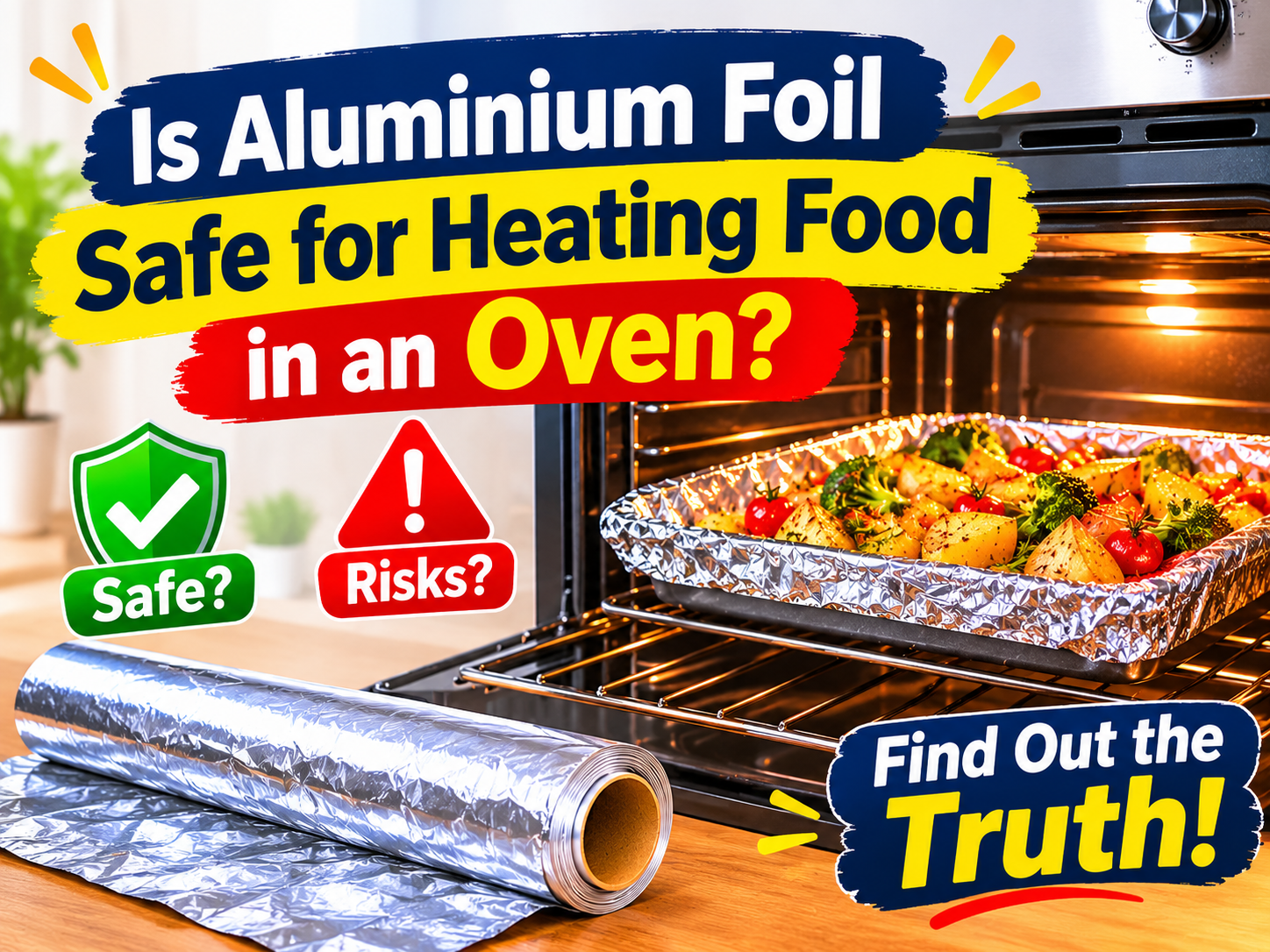
Is Aluminium Foil Safe for Heating Food in an Oven? Yes, aluminium foil can generally be used in conventional electric or gas ovens when used correctly and when the appliance manufacturer’s instructions permit it. It is commonly used to cover baking dishes, wrap suitable foods and prevent excessive browning. However, using foil incorrectly or allowing it to come into contact with certain foods can create food safety concerns.
Aluminium foil is a convenient kitchen material, but it is important to understand when it is suitable for cooking and when another material is a better choice. Acidic and salty foods, in particular, can react with uncoated aluminium and increase the amount that transfers into food.
Let’s understand the possible risks, safe practices and everyday examples.
1. Is Aluminium Foil Suitable for Heating Food in a Conventional Oven?
Generally, yes. Aluminium foil can be used for many conventional oven applications, provided you follow the oven manufacturer’s instructions.
People commonly use it to:
Cover baking dishes to reduce excessive browning.
Wrap suitable vegetables for oven roasting.
Cover meat or chicken during part of the cooking process.
Prevent food from drying out when a recipe recommends covering it.
Catch occasional food drips when placed in an approved position.
For example, if you are baking vegetables in a tray, you may cover the tray loosely with foil if the recipe requires it. However, placing a large sheet of foil across the oven floor is not recommended because it can interfere with heat circulation or damage the appliance.
Read GE Appliances’ guidance on using aluminium foil in ovens.
2. Why Can Aluminium Transfer Into Food?
Aluminium is naturally present in the environment and can also be found in small amounts in many foods. Some aluminium may transfer into food from foil, cookware or food-contact materials.
The amount transferred depends on several factors:
Food acidity: Acidic ingredients can increase aluminium transfer.
Salt content: Salty foods can encourage aluminium to dissolve.
Temperature: Heating can influence the amount of transfer.
Contact time: Longer contact can increase exposure.
Food composition: Different ingredients interact differently with aluminium.
According to Germany’s Federal Institute for Risk Assessment (BfR), aluminium can dissolve more readily when it comes into contact with acidic or salty foods. The institute advises against using uncoated aluminium foil for storing, heating or keeping these foods warm.
Read the BfR guidance on aluminium in food and consumer products.
3. Which Foods Should You Avoid Wrapping in Aluminium Foil?
It is better to avoid direct contact between plain aluminium foil and foods that are highly acidic or salty, especially during heating or prolonged storage.
Here are some everyday examples:
Tomatoes and tomato-based dishes
Tomatoes contain natural acids. Wrapping tomato slices or tomato-based preparations directly in aluminium foil for heating may increase aluminium transfer.
Example: If you are reheating tomato-based pasta sauce, use an oven-safe glass or ceramic dish instead of wrapping the food in foil.
Lemon and citrus-based foods
Lemon, orange and other citrus fruits are acidic. Their juice can react with aluminium.
Example: If you are baking fish with lemon juice, place the fish in an oven-safe glass or ceramic dish rather than wrapping it tightly in plain aluminium foil.
Vinegar-based foods
Foods prepared with vinegar, such as pickles and certain marinades, are acidic.
Example: Avoid wrapping vinegar-marinated vegetables in aluminium foil for prolonged heating or storage. Use suitable oven-safe cookware instead.
Very salty foods
Salt can also increase aluminium transfer.
Example: If you are preparing heavily salted or marinated fish, use a suitable baking dish rather than allowing the food to sit directly against aluminium foil.
The important point is not that these foods automatically become poisonous when they touch foil. Rather, avoiding unnecessary contact helps reduce aluminium exposure.
4. Can You Use Aluminium Foil in a Microwave Oven?
This is an important distinction: a conventional oven and a microwave oven work differently.
In a conventional electric or gas oven, food is heated by hot air and heating elements. Aluminium foil can generally be used when the appliance instructions permit it.
In a standard microwave oven, however, metal reflects microwave energy and can cause electrical arcing or sparks. This may damage the appliance or create a fire risk.
The US Food and Drug Administration (FDA) provides guidance on microwave oven safety and the use of metal materials.
Example: If you want to reheat leftover rice in a microwave, transfer it to a microwave-safe glass or ceramic container. Do not put foil-covered takeaway food directly into the microwave.
Some combination or convection microwave models have specific instructions for metal or foil use. Always check the appliance manual rather than assuming it is safe.
5. What Precautions Should You Follow When Using Aluminium Foil?
If you are wondering whether Is Aluminium Foil Safe for Heating Food in an Oven for everyday cooking, the following precautions are important:
Follow your oven manual: Check the manufacturer’s instructions before using foil inside the appliance.
Avoid lining the oven bottom: Foil can trap heat, affect airflow and potentially damage the oven.
Do not cover the entire rack: Keep air circulation unobstructed.
Avoid direct contact with acidic and salty foods: Use suitable glass or ceramic cookware instead.
Do not store acidic leftovers in foil: Transfer them to an appropriate food-storage container.
Keep foil away from heating elements: Do not allow it to touch exposed elements, oven walls or other restricted areas.
Use only what is needed: Avoid unnecessary layers or large sheets of foil.
These simple precautions can help you use foil more responsibly.
6. Aluminium Foil vs Glass and Parchment Paper: Which Is Better?
Different materials have different uses in the kitchen. The best choice depends on the food and the cooking method.
| Material | Common use | Important precaution |
|---|---|---|
| Aluminium foil | Covering dishes and wrapping suitable foods | Avoid direct contact with highly acidic or salty foods |
| Oven-safe glass | Baking and reheating food | Check that the dish is designed for oven use and follow temperature limits |
| Oven-safe ceramic | Baking and serving dishes | Avoid sudden temperature changes |
| Baking parchment | Lining baking trays | Use only within the manufacturer’s temperature limit |
Practical examples:
If you are baking cookies, oven-safe parchment paper can be a convenient tray liner.
If you are roasting vegetables, an appropriate baking tray may be sufficient.
If you are covering a casserole to prevent excessive browning, foil may be suitable when permitted by the oven manual.
If you are reheating tomato-based food, an oven-safe glass or ceramic dish is a better choice than direct contact with plain aluminium foil.
Remember that ordinary paper, plastic containers and microwave-safe dishes are not automatically suitable for conventional oven use.
7. Does Cooking with Aluminium Foil Cause Health Problems?
Aluminium exposure is not limited to foil. It can come from food, water, cookware and certain food additives.
The concern is excessive or avoidable exposure over time, rather than assuming that every use of foil is harmful.
The European Food Safety Authority (EFSA) established a tolerable weekly intake of 1 mg per kg of body weight per week. This is a safety guidance value for total dietary exposure, not a limit specifically for using aluminium foil.
The BfR also recommends reducing avoidable aluminium intake by choosing appropriate materials and avoiding direct contact between uncoated aluminium and acidic or salty foods.
Therefore, occasional correct use of aluminium foil in a conventional oven should not be confused with unsafe or excessive exposure.
Final Thoughts
Ultimately, Is Aluminium Foil Safe for Heating Food in an Oven depends on how you use it, the food being heated and the instructions provided by your appliance manufacturer.
Aluminium foil is a useful kitchen material and can generally be used in conventional ovens when the appliance instructions allow it. However, it is not suitable for every food or heating method.
Avoid using plain aluminium foil directly with highly acidic or salty foods, never assume it is safe in a standard microwave, and do not line the bottom of your oven with it. Oven-safe glass, ceramic cookware and suitable baking parchment are useful alternatives for many everyday cooking tasks.
The best approach is simple: choose the right food-contact material, follow appliance instructions and avoid unnecessary aluminium exposure while preparing your meals.