
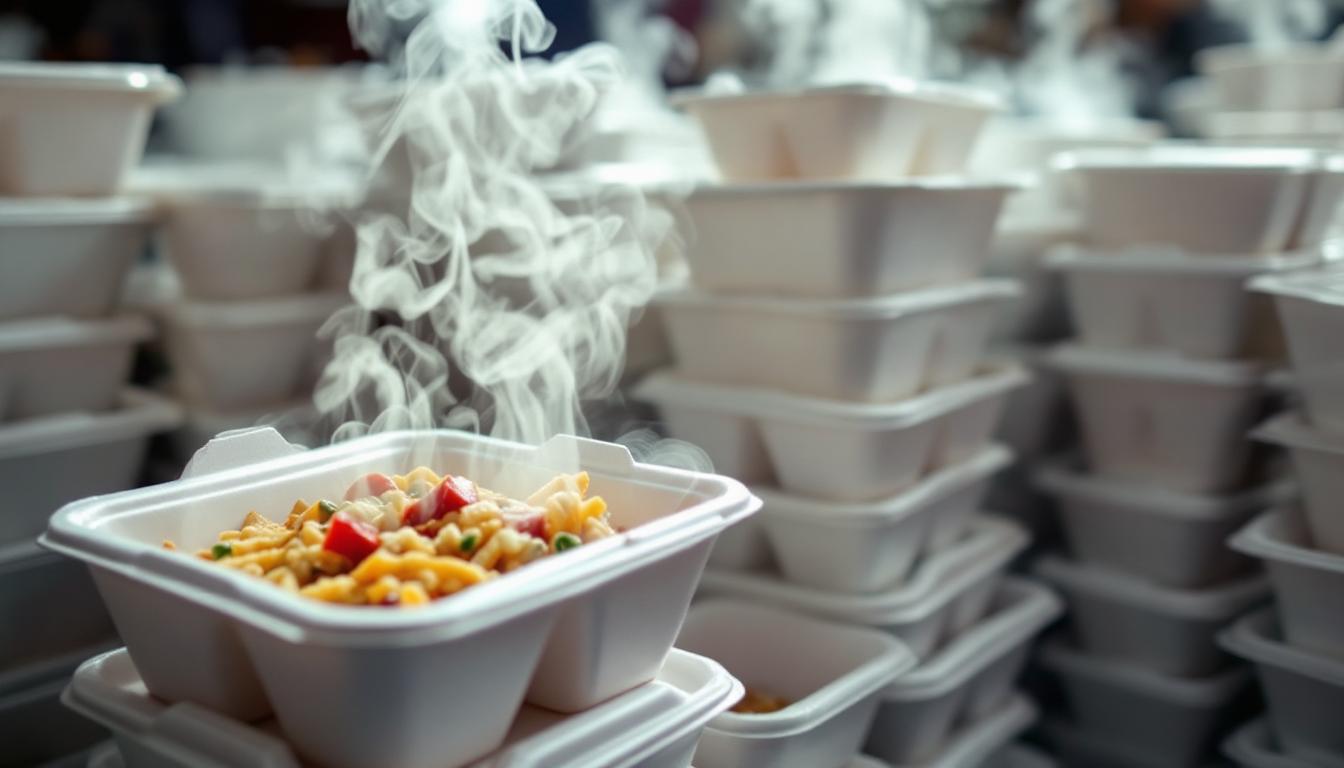
Packing hot food in a polythene bag or plastic container is common in homes, restaurants, takeaway services, and street-food settings. Hot rice, curry, noodles, fried snacks and other foods are often packed immediately after cooking.
But is packing hot food in polythene safe?
The short answer is: it depends on the type of plastic, how it is intended to be used, the temperature of the food and how long the food remains in contact with it. Research does show that chemicals and, in some circumstances, plastic particles can migrate from food-contact materials into food. That does not mean every plastic package is dangerous, but it does mean that “plastic is food-grade” and “plastic is suitable for very hot food” are not necessarily the same thing.
Why Heat Matters When Food Touches Plastic
Chemical migration is one of the main reasons researchers study hot food and plastic packaging.
A 2025 review published in the Journal of Food Science explains that substances from packaging, including compounds associated with plastics, inks and adhesives, can migrate into food under certain conditions. The researchers identify factors such as temperature, contact time and the nature of the food as important considerations.
This means is packing hot food in polythene safe cannot be answered simply by looking at the word “plastic.” The material and its intended application matter.
What Does Research on Polyethylene Show?
Polythene generally refers to polyethylene, one of the most widely used plastics in packaging.
A systematic evidence map published in the Journal of Hazardous Materials examined 116 studies concerning chemicals associated with polyethylene food-contact articles. Researchers identified 377 food-contact chemicals, and 211 of them had been detected migrating from polyethylene articles into food or food simulants at least once.
That number may sound alarming, but there is an important detail: detecting a chemical does not automatically mean that eating the food causes illness. Toxicity, concentration, exposure and regulatory limits all matter.
The study itself also highlights gaps in available evidence, particularly around the full lifecycle and recycling of polyethylene packaging.
What About Hot, Oily or Acidic Food?
Food is not chemically identical from one dish to another.
A 2025 systematic review covering 67 studies and 5,378 samples found that phthalates and bisphenols migrated from food packaging in the studies reviewed. The researchers also reported that migration was influenced by temperature, exposure time and food composition, with high-fat or acidic foods showing higher migration rates in the evidence they examined.
So a steaming oily curry sitting against an unsuitable plastic material for a long time is a different situation from a properly tested food-contact container being used under its specified conditions.
This is one reason is packing hot food in polythene safe should not be treated as a simple yes-or-no question.
What Indian Authorities and Reports Say
The issue has also received attention in India.
In a 2017 written reply published by the Press Information Bureau, the Ministry of Health and Family Welfare stated that chemicals such as residual monomers, additives, plasticizers and pigments can migrate from food-contact plastics under different temperature and time conditions. At the same time, the government noted that plastics complying with specified food-packaging standards are considered safe based on contemporary scientific knowledge.
More recently, a 2025 Parliamentary Standing Committee report examined health hazards associated with compromised or substandard food-grade plastics. The committee specifically noted concerns about possible migration when food is exposed to high temperatures during packaging and transportation and recommended stronger oversight.
The message is therefore not “all plastic is poisonous.” It is that food-contact materials need to be suitable for their intended use and properly regulated.
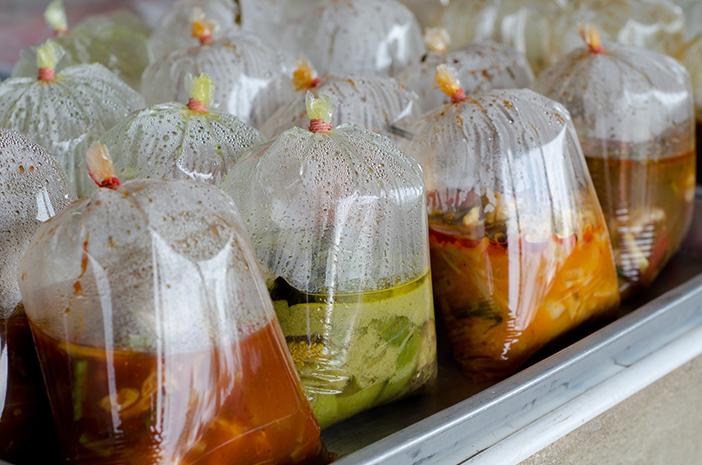
What Doctors and Public Figures Have Said
The issue has also generated public discussion.
In 2024, lifestyle expert Luke Coutinho publicly asked food-delivery companies and restaurants to reduce the use of plastic containers for hot food. Zomato CEO Deepinder Goyal responded that the company would work to highlight restaurants using food-safe packaging so customers could make more informed choices.
This is an opinion and public discussion, not medical proof. Some of the stronger health claims made in that discussion go beyond what can be concluded from the available evidence.
That distinction is important when researching is packing hot food in polythene safe. A doctor’s or public figure’s warning should not be presented as equivalent to the findings of a controlled scientific study.
A Real-Life Indian Example
The question became particularly visible again in 2026 after a Vande Bharat passenger posted about rotis and kachoris being served hot while still inside sealed plastic packaging. Indian Express reported that the passenger questioned whether the packets had been heated while sealed. IRCTC responded that the packaging was suitable for service according to applicable temperature standards and said the food was safe for consumption.
The incident illustrates an important point: food-grade packaging is not automatically the same as packaging intended for every heating condition. The manufacturer’s specifications and approved use matter.
So, Is Packing Hot Food in Polythene Safe?
For everyday consumers, the safest approach is to avoid assuming that an ordinary polythene bag is suitable for very hot food.
If packaging is specifically manufactured and tested for contact with hot food at the relevant temperature, it can be used according to its instructions. But an unknown thin plastic bag, carry bag or packaging material should not automatically be considered suitable simply because it is being used by a food seller.
For home use, glass, stainless steel or other containers specifically designed for hot food can be practical alternatives.
If plastic must be used, look for clear information about food-contact suitability and temperature limits. Do not microwave, boil or repeatedly heat plastic packaging unless the manufacturer specifically says that it is designed for that purpose.
The Bottom Line
So, is packing hot food in polythene safe?
It depends on the material, temperature, food, contact time and intended use of the packaging. Scientific research confirms that migration of chemicals from food-contact materials can occur, and newer studies are also investigating micro- and nanoplastic release under heating conditions.
That does not mean every plastic package is dangerous. But when the type of plastic is unknown or the packaging is clearly not designed for hot food, avoiding direct contact is a sensible precaution.

1 Comment
[…] fried samosas are usually served hot. When hot food touches printed paper, some substances in the ink may transfer to the food. The extent of transfer […]