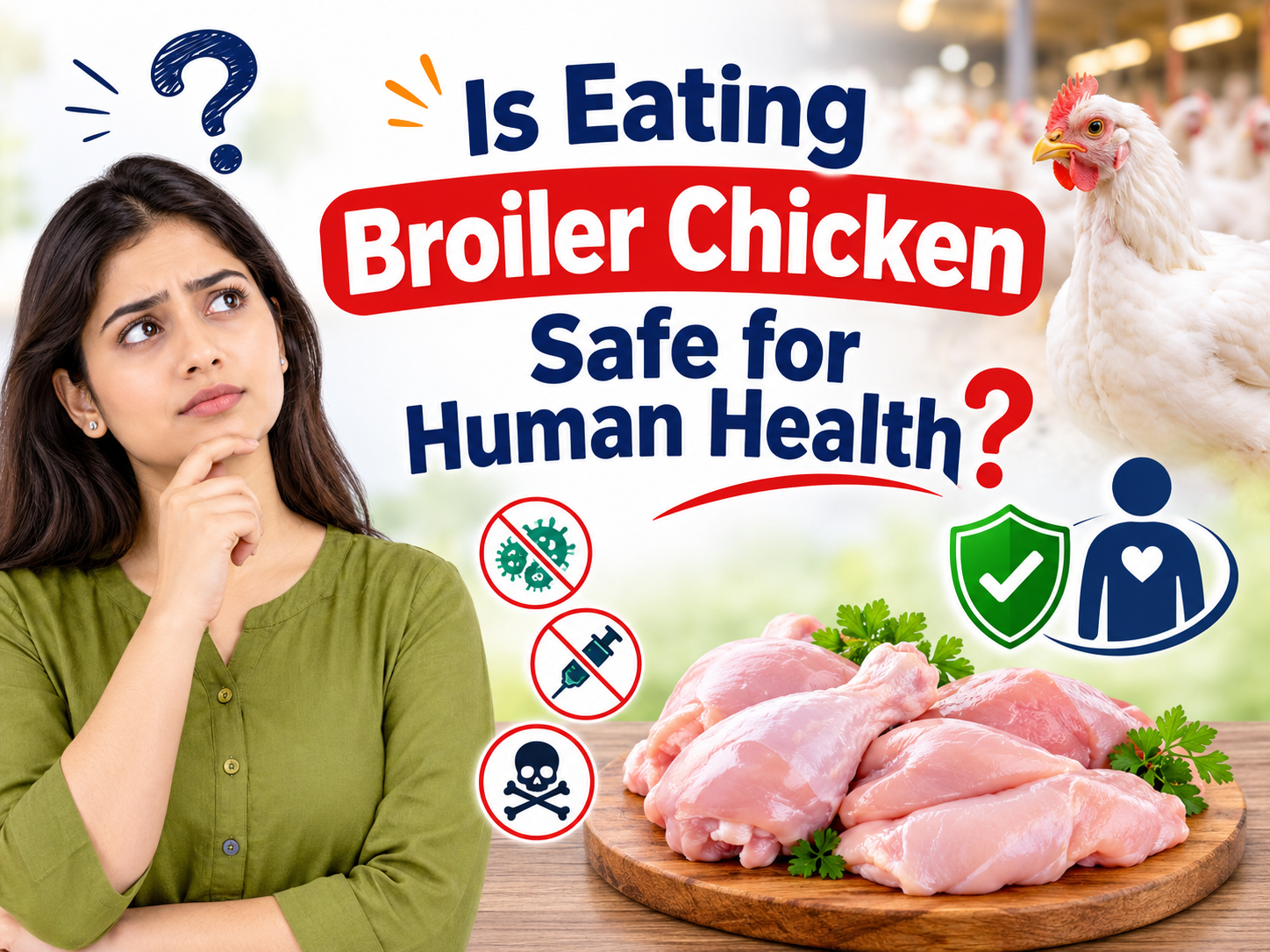
Is Eating Broiler Chicken Safe for Human Health? This is a common question among people who regularly include chicken in their meals. Broiler chickens are specially raised for meat production and are widely available in markets, supermarkets and restaurants. However, concerns about rapid growth, antibiotics, hormones and food contamination have made some consumers question whether broiler chicken is a healthy choice.
The good news is that broiler chicken is not automatically harmful to human health. When it comes from a hygienic and properly regulated source, is stored correctly and is thoroughly cooked, it can be part of a balanced diet. The main concerns are related to meat quality, improper antibiotic use, bacterial contamination and unsafe handling.
1. What Is Broiler Chicken?
Broiler chicken refers to poultry raised specifically for meat production. These birds are bred to grow relatively quickly and develop meat suitable for consumption.
Unlike laying hens, which are primarily raised for egg production, broiler chickens are raised for their meat. Their growth is influenced by breeding, nutrition, farm management and living conditions.
Because broiler chicken is widely available and provides protein, many households consume it regularly. However, the way the birds are raised, processed, transported and stored can affect the safety and quality of the final product.
2. Is Eating Broiler Chicken Safe for Human Health?
Yes, broiler chicken can be safe to eat when it is produced under appropriate food-safety standards and handled properly.
The important point is that the word “broiler” does not mean the chicken is unsafe. Like other poultry meat, it can carry harmful microorganisms if slaughtering, processing, transportation or storage conditions are unhygienic.
The Food Safety and Standards Authority of India (FSSAI) identifies microbial contamination, chemical contamination, spoilage, adulteration and improper storage as important meat-safety concerns.
Read the FSSAI guidance: https://fssai.gov.in/upload/uploadfiles/files/Guidance_Note_Meat_Poultry_03_02_2021.pdf
Therefore, Is Eating Broiler Chicken Safe for Human Health depends not only on the type of chicken but also on its source, freshness, handling and cooking.
3. Nutritional Benefits of Broiler Chicken
Broiler chicken can provide several nutrients when included in a balanced diet.
Good source of protein: Chicken contains protein that helps the body build and repair muscles and maintain normal body functions.
Provides essential nutrients: Chicken supplies nutrients such as vitamin B12, niacin, vitamin B6, phosphorus and selenium. The exact nutritional content depends on the cut and preparation method.
Can be included in balanced meals: Skinless chicken prepared by boiling, grilling, baking or using moderate amounts of oil can be part of a balanced eating pattern.
However, deep-fried chicken, heavily processed chicken products and preparations containing excessive salt or oil may have a different nutritional profile.
4. Antibiotics in Broiler Chicken: Should You Be Concerned?
One of the major concerns about poultry farming is the use of antibiotics.
Antibiotics may be used in animals to treat bacterial infections. Problems can arise when these medicines are used irresponsibly, when prohibited drugs are used, or when the required withdrawal period is not followed before the animal is slaughtered.
This can lead to antibiotic residues in meat. Inappropriate antibiotic use in poultry production can also contribute to antimicrobial resistance, which makes infections harder to treat.
FSSAI’s food-safety guidance discusses veterinary drug residues and the importance of controlling them in meat and poultry products.
Read more: https://mail.fssai.gov.in/upload/uploadfiles/files/Guidance_Document_Poultry_06_01_2020.pdf
Consumers should purchase chicken from reliable sellers who follow food-safety requirements. Washing or cooking meat should not be treated as a way to remove every possible chemical residue.
5. Real News: Study Finds Antibiotic-Resistant E. coli in Retail Chicken in Kerala
A report published by Onmanorama on February 12, 2026, highlighted food-safety concerns following a study of retail chicken meat in Kerala.
Researchers examined 600 chicken samples collected between 2019 and 2023 from six districts: Kozhikode, Palakkad, Thrissur, Ernakulam, Kollam and Pathanamthitta. The study reported that more than half of the tested samples contained E. coli, with genetic analysis identifying antibiotic-resistance genes in several bacterial isolates.
The findings raised concerns about poultry handling, slaughtering hygiene and the possible spread of antibiotic-resistant bacteria through the food chain. The report also highlighted the risk of cross-contamination when raw chicken is handled or washed in household kitchens.
What does this mean for consumers?
This study does not mean that all broiler chicken is unsafe to eat. It examined samples from specific locations and periods, so its findings should not be generalised to every chicken product in India. However, it demonstrates why hygienic slaughtering, proper refrigeration, safe handling and thorough cooking are important.
Read the news report: https://www.onmanorama.com/news/kerala/2026/02/12/kerala-chicken-e-coli-contamination-study-report.amp.html
6. What Are the Possible Health Risks of Eating Unsafe Chicken?
The biggest immediate food-safety risk from chicken is often bacterial contamination rather than the fact that it is a broiler bird.
Raw or undercooked poultry may contain bacteria such as:
Salmonella: Can cause diarrhoea, fever, stomach cramps and vomiting.
Campylobacter: A common cause of bacterial gastroenteritis that can lead to diarrhoea, abdominal pain and fever.
Other harmful microorganisms: Poor hygiene and improper storage can allow contamination and spoilage.
The World Health Organization explains that Campylobacter can be transmitted through contaminated poultry and that thorough cooking kills the bacteria.
WHO reference: https://www.who.int/news-room/fact-sheets/detail/campylobacter
People who eat contaminated or undercooked chicken may develop food poisoning. Young children, older adults, pregnant people and individuals with weakened immune systems may be more vulnerable to serious complications.
7. How to Choose Fresh and Safe Broiler Chicken
Choosing chicken carefully is an important step in reducing food-safety risks.
Follow these practical checks:
Buy from a hygienic shop: Choose sellers who maintain clean equipment, work surfaces and storage facilities.
Check the appearance: Avoid chicken with unusual discolouration, damaged packaging or visible signs of spoilage.
Check the smell: Fresh chicken should not have a strong, unpleasant or rotten smell.
Check the storage temperature: Refrigerated chicken should be kept cold, while frozen chicken should remain properly frozen.
Check the packaging: For packaged chicken, look at the use-by date, storage instructions and signs of leakage or damage.
Avoid questionable sources: Do not purchase meat that has been left exposed to dust, insects or unsuitable temperatures.
Remember that appearance and smell cannot confirm the absence of harmful bacteria. Buying from a hygienic source and maintaining the cold chain are equally important.
8. How to Cook Broiler Chicken Safely
Even fresh chicken can become unsafe if it is not handled and cooked properly.
Do not wash raw chicken: Splashing water can spread bacteria to the sink, kitchen surfaces and nearby food.
Keep raw and cooked food separate: Use separate chopping boards and utensils where possible.
Wash your hands: Clean your hands with soap after handling raw chicken.
Cook thoroughly: Chicken should reach an internal temperature of 74°C (165°F) at its thickest part. Use a food thermometer for a reliable check.
Refrigerate leftovers promptly: Store cooked chicken in the refrigerator within two hours, or within one hour in very hot conditions.
Thaw safely: Defrost frozen chicken in the refrigerator or using another safe method, not by leaving it at room temperature for long periods.
The CDC provides detailed guidance on preventing food poisoning from chicken: https://www.cdc.gov/food-safety/foods/chicken.html
9. Should You Eat Broiler Chicken Every Day?
Broiler chicken can be included in a healthy diet, but eating it every day is not necessary for good health.
A balanced diet should include different protein sources such as pulses, beans, eggs, fish, dairy products and chicken, depending on individual dietary needs and preferences.
If you regularly eat chicken, consider choosing skinless cuts and healthier cooking methods. Limit deep-fried preparations, processed chicken products and meals containing excessive salt.
People with specific dietary or medical requirements should seek advice from a qualified healthcare professional or registered dietitian.
Conclusion: Is Eating Broiler Chicken Safe for Human Health?
Is Eating Broiler Chicken Safe for Human Health? In general, yes, when it comes from a reliable source and is handled, stored and cooked correctly. Broiler chicken can provide useful protein and other nutrients as part of a balanced diet.
The important concerns are unhygienic processing, bacterial contamination, improper refrigeration, undercooking and irresponsible antibiotic use. Consumers can reduce many of these risks by choosing fresh chicken from hygienic sellers, following safe kitchen practices and cooking it thoroughly.
Rather than avoiding all broiler chicken based on rumours, make informed food choices and focus on proper food safety.