Have you ever had some extra atta on hand for your chapatis/rotis and then found yourself wondering what to do with the surplus dough? It can seem such a waste to just chuck it out when you’ve already gone to the effort of making it. Putting it in the fridge for the next day is one option, but what if you wanted to save it for a bit longer?
You’ll probably notice the dough starts to darken; it feels different to the touch, and the chapatis you make simply don’t taste as fresh as they normally would. All of that can be quite frustrating, especially if you’re trying to avoid any food going to waste.
So, is it safe to store kneaded atta dough in the fridge, and what effect does refrigeration have on the colour, texture and taste?
Let’s look at what the food safety guidance and the science actually tell us, together with a few real-world examples from a fairly typical Indian kitchen.
Can You Store Kneaded Dough in the Fridge?
Yes, you can refrigerate freshly kneaded wheat dough and aim to use it the next day, provided it has been handled hygienically and kept properly chilled. However, this does not guarantee that every batch will remain safe or maintain its original quality until the next day.
The USDA recommends keeping the refrigerator at 40°F (approximately 4.4°C) or below to help protect food from harmful bacterial growth. Refrigeration slows the growth of many bacteria, but it does not stop all spoilage or kill every harmful microorganism. For more information, see the USDA’s official guidance on refrigeration and food safety.
For normal day-to-day cooking, refrigeration helps keep the dough cold and slows microbial growth, but it does not preserve the dough exactly as it was when freshly kneaded. During storage, the dough may become darker, firmer or stickier, and chapatis made from it may differ in texture, colour and overall quality from those made with freshly kneaded atta. These changes in quality do not automatically mean the dough is unsafe, but refrigeration alone cannot guarantee that it is safe to eat.
Why Does Kneaded Atta Dough Change Colour in the Fridge?
Have you ever opened a container of leftover atta dough and noticed that the surface has gone dark?
This isn’t at all unusual. There’s been scientific work on wholemeal dough looking at the darkening that can occur during storage, and this has been linked to an enzyme known as polyphenol oxidase (PPO), which is one of the enzymes that can cause browning in wheat products.
A study in the International Journal of Food Science & Technology looked at colour changes in whole wheat dough stored at refrigerated temperatures (5-6°C). There was a decrease in dough brightness during storage, with significant changes in the untreated dough after 24 hours and further changes after 72 hours. The colour of the dough and the acceptability of the resulting chapatis were affected by these changes. Read the research study.
This goes some way to explaining why dough which looked quite fresh when it was being kneaded could end up looking a bit brown and dull after it’s been in the fridge.
However, not every colour change means the dough is spoilt. Enzymatic browning and microbial spoilage are two different things. If in doubt about any unusual darkening (particularly if it’s accompanied by an unpleasant odour, visible mould, etc.), then you should treat it with caution.
How Does Refrigeration Affect the Texture and Taste of Kneaded Dough?
Freshly worked atta dough is generally soft, smooth and easy to roll. Once it’s been in the fridge, it may not be quite the same in terms of feel and performance.
Here are some changes you may observe.
1. The Dough May Become Darker
The surface may slowly take on a browner, duller appearance. As the research cited above makes clear, enzymatic activity in wholewheat dough can be responsible for this.
For example, if you’ve made your dough in the evening for the next day’s meals, it may look quite different when you open the container in the morning. The amount of difference will vary depending on the flour and the storage conditions.
2. The Texture May Change
Dough that was soft and pliable when freshly kneaded can become firmer, stickier or more difficult to roll after being refrigerated.
A 2021 study in the journal Foods looked at the changes that occur in wholewheat dough and noodles during refrigerated storage. It found that the storage-induced changes in the dough components were linked to differences in various physical and cooking properties. The study was conducted using specific experimental formulations, so the results should not be interpreted as being applicable to every single batch of home-made dough. Read the study.
3. The Chapatis May Not Taste as Fresh
Have you ever made chapatis out of the leftover dough and found that the result wasn’t quite the same as chapatis made from atta that you’ve just kneaded?
Stored dough can lead to changes in the colour, texture and indeed the overall acceptability of the chapatis. The published work on refrigerated dough confirms these quality changes, though the impact on taste will of course be dependent on the recipe and the storage conditions.
If the cooked chapatis have an odd or unpleasant taste, then don’t ignore that either. Don’t go around tasting the raw dough to see if it’s safe.
How Long Can You Keep Kneaded Dough in the Fridge?
This is one of the most frequently asked questions in the kitchen of a typical household.
The answer is not straightforward because neither the general FSSAI guidance nor the USDA refrigeration guidance provides a verified, specific safe storage period for homemade kneaded atta dough.
FSSAI’s general guidance recommends keeping food that requires cold storage below 5°C. The USDA recommends maintaining a refrigerator temperature of 40°F (approximately 4.4°C) or below. You can read the USDA’s recommendations in its official refrigeration and food safety guide.
These are temperature recommendations, not guarantees that kneaded atta dough will remain safe for a particular number of days. USDA storage-time charts cover specific food categories, but they do not establish a specific storage duration for homemade kneaded atta dough.
Scientific studies have shown that the quality of wholewheat dough can change during refrigerated storage (indeed, within the first day). That doesn’t establish a single universal cut-off point for every household recipe.
For practical purposes:
- Freshly kneaded dough: Best used fresh for the usual texture and cooking qualities of the dough.
- Dough kept overnight: Check its appearance and smell before use, and make sure it was put in the fridge promptly and kept cold throughout storage.
- Dough stored for two or three days: The quality changes may become more apparent. There is no verified universal safe-storage period for homemade atta dough, so don’t assume it is safe simply because it has been refrigerated.
- Dough with suspicious changes: Visible mould, an unpleasant odour or other signs of spoilage mean the dough must be discarded.
Consistent refrigeration means keeping the dough at a suitably cold temperature throughout storage. For example, place it in the fridge promptly after kneading, keep the refrigerator at the recommended temperature, and avoid leaving the dough on the kitchen counter for extended periods before putting it back in the fridge. Repeated periods at warmer temperatures can allow microbes to grow.
Remember that normal appearance and normal smell do not guarantee that food is free from harmful microbes. Safe handling and consistent refrigeration are still essential.
How Should You Store Kneaded Dough in the Fridge?
If you’re regularly working with extra atta at home a few simple habits will go a long way to keeping it in good order.
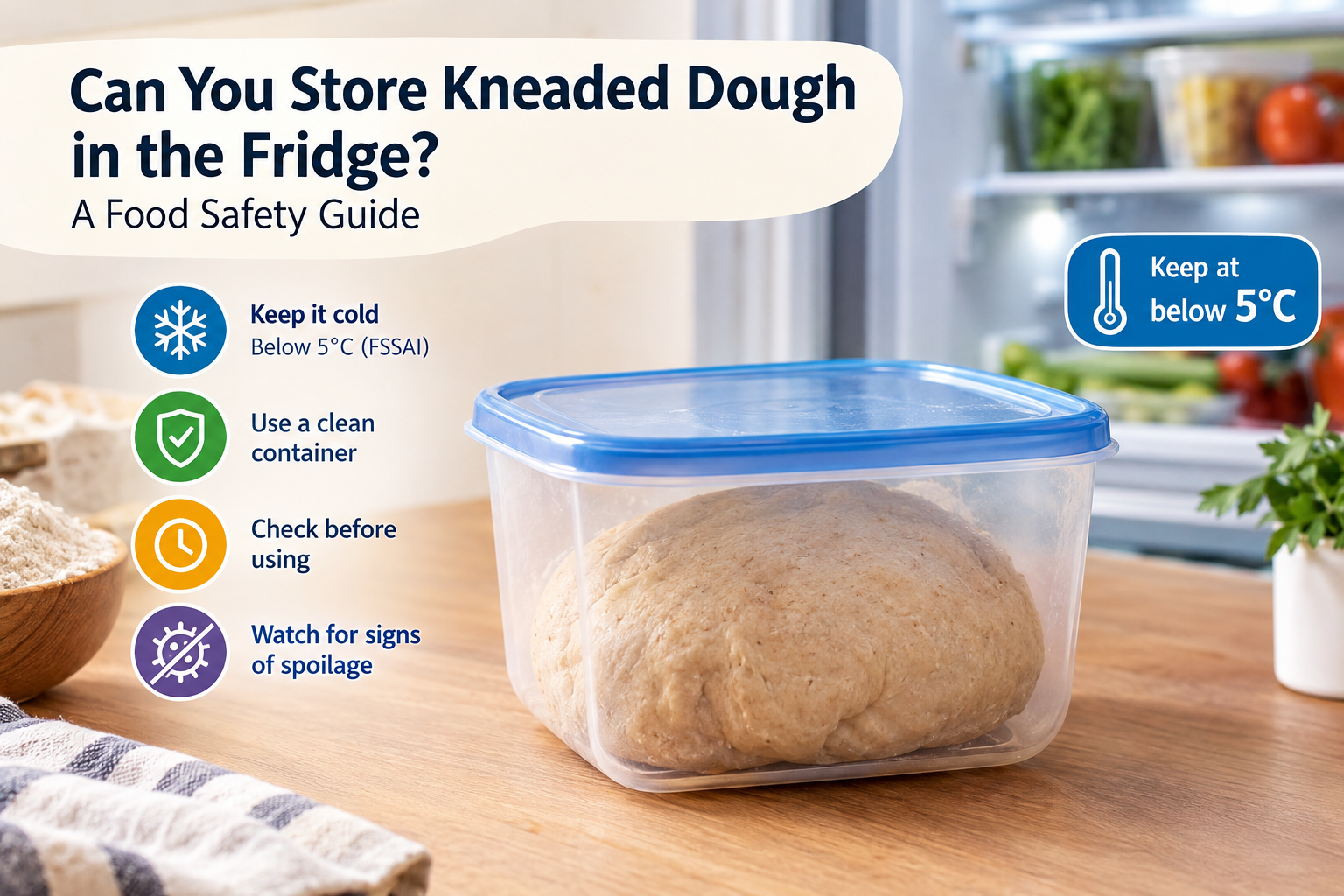
1. Use a Clean Container
Keep the dough in a clean container with a lid. This will help protect it from contamination and stop it picking up any odours from the other foods in the fridge.
2. Keep the Dough Covered
Leaving the dough out in the air will cause the surface to dry out. Keep it covered so that it stays moist and doesn’t come into contact with anything else.
3. Refrigerate It Promptly
Don’t leave freshly kneaded dough on the kitchen counter for any unnecessarily long period, particularly in warm weather. Get it into the fridge promptly and make sure the fridge is kept below 5°C, in line with FSSAI’s general cold-storage guidance. The USDA recommends keeping the refrigerator at 40°F (approximately 4.4°C) or below. You can read its official refrigeration guidance here.
4. Maintain Good Hygiene
Use clean hands and clean utensils when working with the dough. Keep the container clean, closed and separate from any other uncovered food which could potentially contaminate it.
5. Check Before Using
Before you use the chilled dough, check for any visible mould, any unusual discoloration, any off smell or other obvious signs of spoilage.
If it’s gone off in any way, then just chuck the dough rather than trying to salvage it by adding fresh atta or cooking it.
Final Verdict
Yes, you can store kneaded atta dough in the fridge, but refrigeration does not preserve the dough in its original state indefinitely or guarantee that it will remain safe for a specific number of days.
Research into wholewheat dough has shown that both colour and chapati quality can be affected during refrigerated storage. That helps to explain why dough left in the fridge may end up a darker colour and why the chapatis made from it may not be quite the same as those made from fresh atta.
For normal food-safety purposes, keep the dough covered in a clean container, get it into the fridge as soon as possible, keep the fridge at below 5°C, and check it thoroughly before using it. The USDA recommends a refrigerator temperature of 40°F (approximately 4.4°C) or below. If the dough has developed mould, has an off smell or otherwise looks suspect, it must be thrown away. Do not rely on appearance or smell alone to determine whether food is safe.
Freshly worked dough is usually the better choice if you’re after chapatis of the usual colour, texture and taste. On the issue of food safety, you should never have to compromise on safety in order to avoid waste. You should never have to ignore the signs that food has gone off just to save it.
Editorial Note: This article is intended for general food-safety awareness. FSSAI’s guidance cited here concerns general cold-storage practices, while USDA guidance covers general refrigeration and food handling. The research studies discuss changes in dough quality. These sources do not establish a guaranteed safe storage period for every homemade atta dough recipe.