
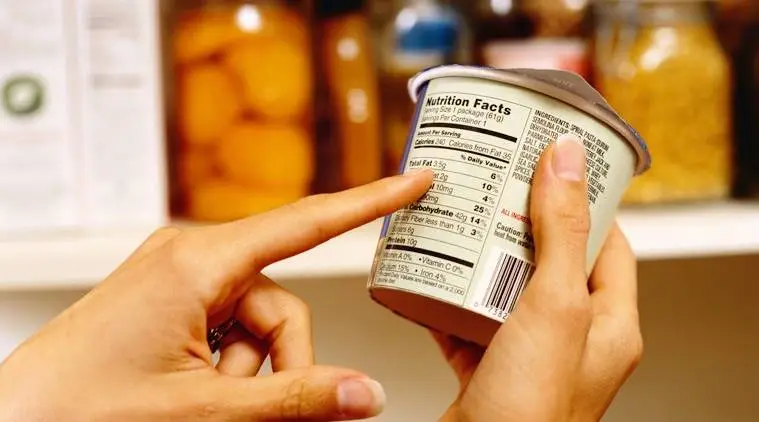
When shopping for groceries, it is easy to choose a product because of its attractive packaging, familiar brand or health claims. However, the most useful information is often printed in small text on the back of the packet. Learning how to read labels on food packages can help you understand what you are buying, compare similar products and make more informed food choices.
Food labels provide details about ingredients, nutritional values, allergens, dates and storage instructions. India’s Food Safety and Standards Authority of India (FSSAI) offers consumer guidance on reading food labels. A few simple checks can make grocery shopping more informed.
1. Start With the Ingredient List
The ingredient list is one of the first things to check when buying packaged food. It tells you what the product contains, including its main ingredients and, where declared, additives, colours and flavourings.
Under India’s food-labelling framework, ingredients in most multi-ingredient packaged foods are listed in descending order by weight or volume at the time of manufacture. This means the ingredients used in the greatest amounts generally appear first.
For example, when comparing two breakfast cereals, check whether whole grains, sugar or refined grains appear near the beginning of each list. This provides useful context that the product name or front-of-pack image may not communicate.
You can refer to the FSSAI Labelling and Display Regulations for regulatory details.
2. Understand the Nutrition Information
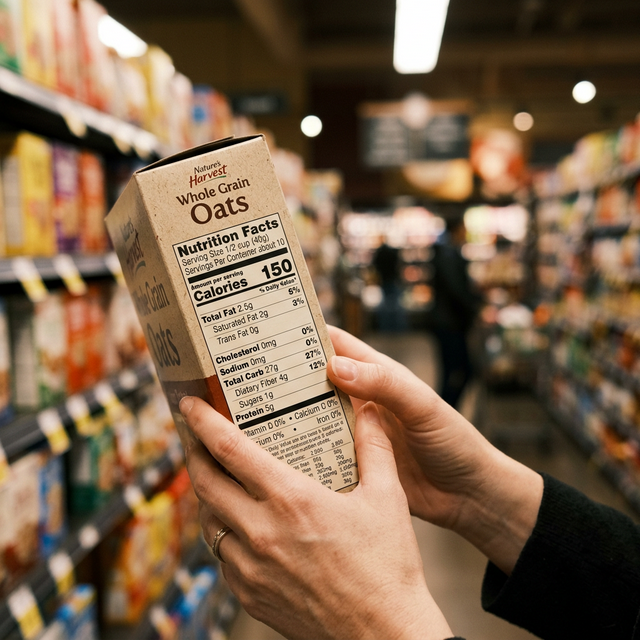
The nutrition panel helps you understand how much energy and which nutrients a food provides. Depending on the product and applicable requirements, how to read labels on food packages may show energy, protein, carbohydrates, total sugars, added sugars, total fat, saturated fat, trans fat and sodium.
When learning how to read labels on food packages, pay attention to the quantity on which the nutritional values are based. Some products display values per 100 grams or 100 millilitres, while others also provide per-serving information.
For example, a snack packet may contain several servings. If you eat the entire packet, your total calorie, sugar and salt intake may be greater than the per-serving figures suggest.
Compare similar products using the same quantity. A product with a healthy-sounding name is not automatically the better choice; the nutrition panel provides more useful information.
The US Food and Drug Administration’s nutrition label guide explains serving sizes, calories and nutrients in detail. Its label format is US-specific, but the general principle of checking serving sizes is useful when comparing foods.
3. Check for Allergens
Food allergens deserve special attention, particularly for people with known food allergies. Ingredients such as milk, peanuts, tree nuts, eggs, soy and wheat can trigger reactions in susceptible individuals.
Read both the ingredient list and any separate allergen declaration. Also check precautionary statements such as “may contain” where provided. Such statements can indicate a possible risk of unintended allergen presence.
Do not assume that a familiar product is always made with the same ingredients. Formulations and manufacturing processes can change, so how to read labels on food packages solution is check the label each time when an allergy makes an ingredient important.
The FDA’s food allergy guidance explains why careful label reading matters. For products sold in India, follow the allergen information applicable to that product’s label.
4. Look at Manufacturing and Date Markings
Before placing a packaged food in your basket, look for its relevant date markings. Depending on the product, these may include a manufacturing or packing date, a best-before date, or a use-by or expiry date.
These terms do not necessarily mean the same thing. A best-before date generally relates to the period for which the food is expected to retain its intended quality under specified conditions. A use-by or expiry date may indicate a more important limit for use, depending on the product and applicable rules.
Do not rely on date markings alone. Check that the seal is intact and the packet is not swollen, leaking, damaged or otherwise abnormal. Avoid products past their applicable use-by or expiry date.
5. Read Storage and Usage Instructions
A packaged product can deteriorate if it is stored incorrectly, even when its date marking has not passed. Look for instructions such as “keep refrigerated,” “store in a cool, dry place” or “refrigerate after opening.”
For example, a product that requires refrigeration should not be treated like a shelf-stable snack. After opening, follow the manufacturer’s directions for storage and consumption.
Understanding how to read labels on food packages also means checking preparation instructions. Some products require cooking or other handling before they are safe to eat. Follow the directions rather than assuming every packaged food is ready to consume.
6. Check the Food Business and Package Details
For packaged food sold in India, look for the FSSAI logo and applicable licence or registration number. You can also check the manufacturer’s or brand owner’s details, net quantity, batch or lot identification and other declarations required for the product.
These details help consumers identify the food business responsible for the product and provide useful information if they need to make an enquiry or complaint. An FSSAI number alone, however, does not guarantee that every individual packet has been handled or stored correctly.
Also examine claims such as “natural,” “multigrain,” “high protein” or “no added sugar.” Read the ingredient list and nutrition panel to understand what the product actually contains instead of relying only on prominent marketing messages.
7. Make Label Reading a Shopping Habit
You do not need to study every line of every packet for several minutes. Start with a simple routine: check the ingredients, compare nutritional information, look for allergens, inspect date markings and follow storage instructions.
With practice, how to read labels on food packages becomes a straightforward part of grocery shopping. You will be better prepared to compare similar products and understand the information printed on their packaging.
Remember that no single label detail tells you everything about a food. Consider the full label, your dietary needs and the way the product will be stored and consumed. Small checks before buying can help you make more informed everyday food choices.






1 Comment
[…] considered a safe food-handling practice. FSSAI has explicitly advised against using newspapers for food packaging, serving or absorbing excess oil from fried […]